
Choose your real planning cycle
Plan from payday to payday, every four weeks, by calendar month or over your own dates. Your bills keep their actual due dates, even when they follow a different schedule.
How Sam works
Start with the money you have and the things it needs to cover. Sam brings the dates and amounts together so you can look ahead.
Plan from payday to payday, every four weeks, by calendar month or over your own dates. Your bills keep their actual due dates, even when they follow a different schedule.
Add bills, expected income and planned spending yourself, or start with eligible Wallet suggestions. Review prefilled amounts and schedules, check paid statuses, and choose which current-cycle payments to bring into the plan.
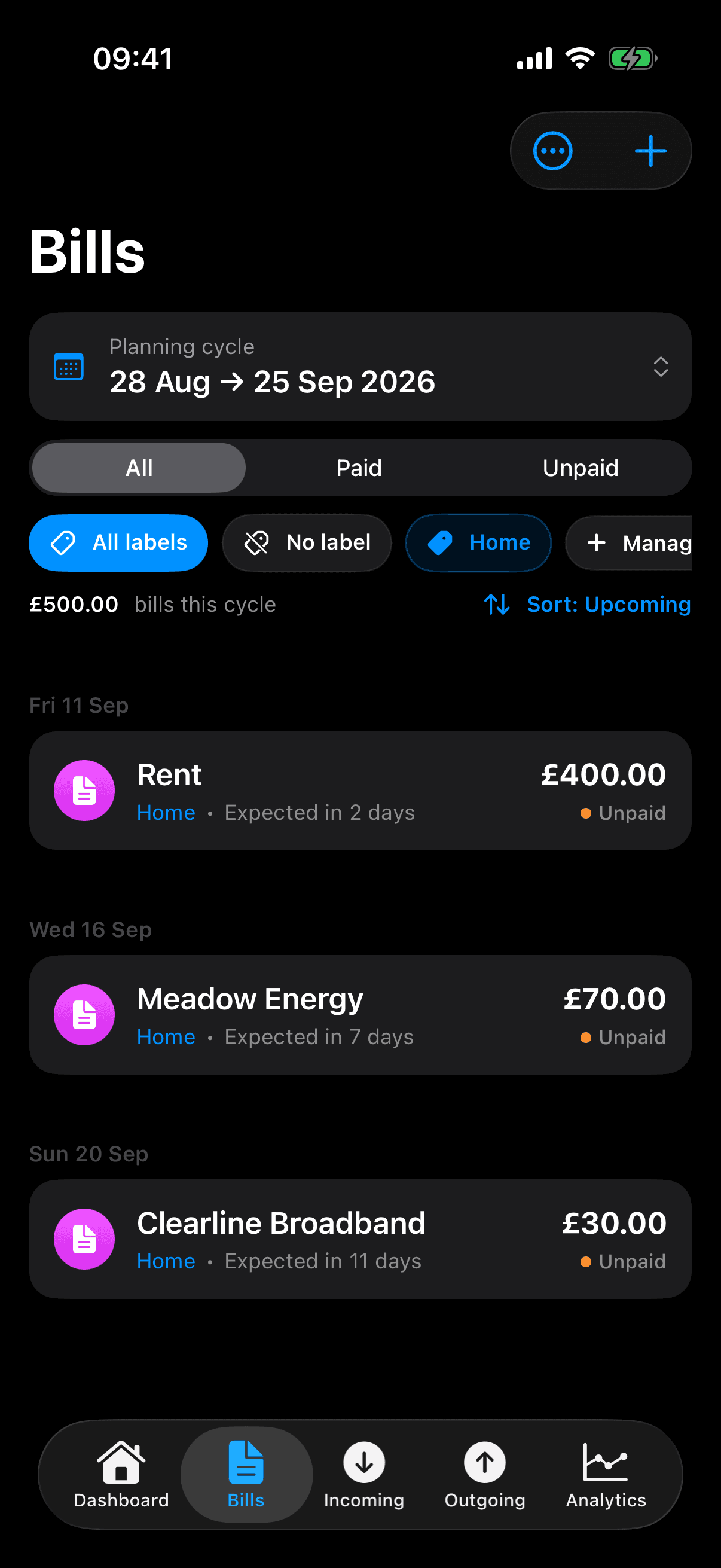
Check your starting balance and review the plan before saving. Money you expect to receive stays separate from money you already have.
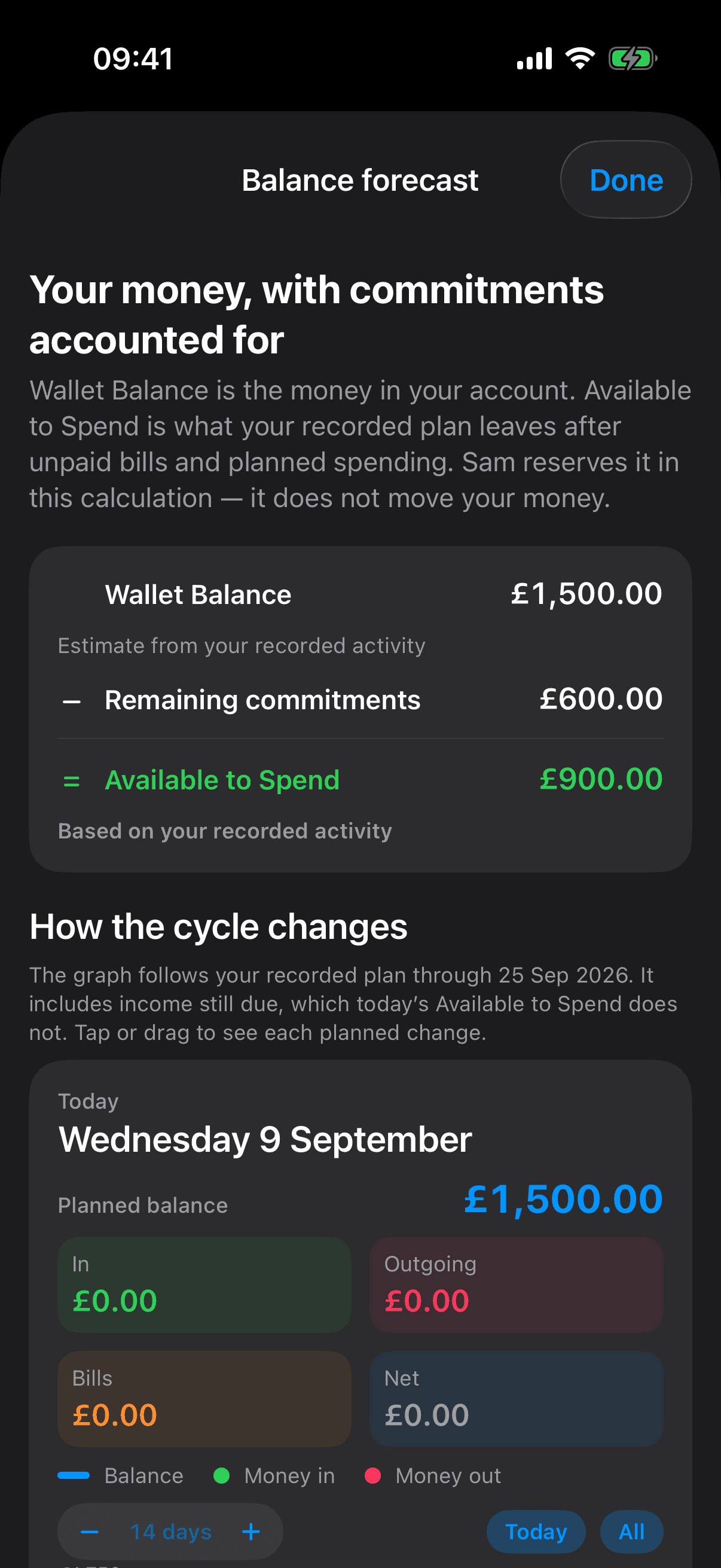
Available to Spend estimates what is left after unpaid bills and planned spending. Open the forecast to see projected changes on their actual dates.
Change one bill payment without rewriting future occurrences. Enter variable income when you know its amount. If the plan and your bank differ, use Check bank to review possible explanations before applying financial changes.
Manual from the start, if you prefer
Set up a plan with your own balance, income and commitments. There is no Sam account to create. Wallet assistance is optional and depends on eligible accounts and your permission.
Sam does not move or reserve money. Available to Spend is an estimate based on your recorded plan. Keep your commitments and balance up to date, and check important figures against your account.
A forecast can include expected income. It is a projection, not money already received.